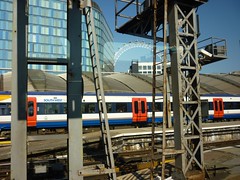
Sunny days make for spontaneous photography, in this case, the jolly complexity of the urban environment. Just over there, on the banks on the river, the tourists will be gathering themselves for a day's pleasure. Here in the station, we worker bees reach for our black cases and bags.
Wednesday, June 30, 2010
Monday, June 14, 2010
Realities
These days I'm on a bit of an alternate reality hike, SF-wise.
Mostly these guys:
Christopher Priest - almost anything, but recently, The Separation
Kim Stanley Robinson - The Years of Rice and Salt
Mostly these guys:
Christopher Priest - almost anything, but recently, The Separation
Kim Stanley Robinson - The Years of Rice and Salt
Saturday, December 13, 2008
Matter
The explosions at the end of Iain M. Banks' Matter are still ringing in my ears. He's getting really good at constructing very clever things. Scratch that, he has been really good for quite some time at telling clever stories, that are much easier to deal with at face value, than to properly think about what's inside. I'm sure it's deliberate.
On the surface, it's a typical Culture space western. The high plains drifter is played by a young woman, of course an Agent of Special Circumstances. And of course, accompanied by a lethal bundle of technology and irony in the shape of the hovering offensive drone. Highly dangerous, and yet supremely moral, they can stop an army of heavily armed knights just by thinking about it (and harassing the column with weapons invisible to pre-technological eyes). They pluck some victims of primitive war from destruction, and shelter them aboard their god-like ships. It's primarily these two who we follow, as they crash around, and with their clever tools and tech, save at least one world from horrid alien interference.
However, it's the worlds in question that deserve a closer look. The wider world of the life-strewn galaxy is painted in, like a Victorian genre picture of a day at the races. All types are there, and some of them are those that you might actually want to meet. But with most of them, you are glad to be back in your armchair on Earth. As with other Culture novels, Banks is at the same time completely cynical (all species are bastards, and the bigger species are sometimes the biggest bastards) and also brightly optimistic (generally speaking, trillions upon trillions of members the want-for-nothing super-species just loll around having delightful egalitarian funny naked sexy lives in their sentient super-homes, causing absolutely no trouble at all).
Another world full of humans is depicted. One tribal faction fights another, through sweat, mud, blood and pain, for supremacy of their part of their backward planet. Most of them are firmly trapped in this bubble of pre-development, and while they might know that there are higher beings, such as the Culture people, out there above them, they also know that they are powerless to reach through the bubble. As we read of their wars, we know that their factionalism is pointless (they are the same species) and their religion is void (their god is a squatter who couldn't care less about them). However, although there is hurt and destruction in their slice of the world, there is, there is at the same time love, hope and honour.
The planet, it is realised, is a Shellworld, a Nautilus-like construction, yes a machine!, of concentric chambers. Dozens of species dwell in the spaces, some walking on earthy sub-surfaces underneath the glow of rolling mechanical sunlets (nuclear? stranger physics?), others flopping in enclosed oceans or floating in endless clouds, others enjoying the vacuum of their compartments. Huge struts or arteries, called Towers, let the action slip, via hermetic doors millions of years old, from one sub-world to another. This in the true spectacle of the book, and the other characters and species dance around it and through it.
The humans are effectively pets of the local alien overlords (there are several to choose from), who happen to be floating, slightly smelly, multilegged and hilariously ungrammatical. The turf war is fought out with carbines, swords and lances, and the occasional mounted creature. The faction having recently discovered steam power (probably informed by the spindly wotists or perhaps the stinky blobules) gains the upper hand, and forges an empire. However, there is bittereness. Not only do thousands die in the wars of occupation, but the rightful king is sneakily deposed by an obviously evil schemer. Our heroes are royal splinters in this struggle (and the SC agent is a sister to them). Meanwhile, the world's systems (naturally, it's got an infinity of software and embedded mechanisms) are being interfered with by who-knows-who, and there are these strange movements of starships. It's a little like a quest to restore Narnia in a far-off galaxy. SC drones play the fauns and forest creatures, and a sentient ship plays an Aslan.
So Hoorah when the protagonists not only restore order, but also intervene to stop the whole concentric world from destruction. And then Aahh, when orphans are all given hearths and homes beneath the peaceful rolling anti-gravity ceiling blobs.
But there's doubt, just as Banks intended I'm sure. Just who controlled who in the chain of rebellion and chaos? Did we really just sympathise with the suicide bomber in service of the primitive monarchy? What was the true function of the mechanical world? Not for living in, that's obvious, and purpose of the colossal mechanisms at its centre remains obscure. Why did the eons-frozen egg/bomb/demon so want to destroy it? Was it lying when it said the Shellworlds were a timebomb, an environmental threat of their own? Perhaps the happy-ending pulled from tragedy is really a disguise for a further sinking into a sea of doom.
Perhaps, as for the humans trapped down in level 8, there is much more above and below than we can reliably process. And if we can do anything about it then fine, but if not, then we may as well enjoy ourselves.
On the surface, it's a typical Culture space western. The high plains drifter is played by a young woman, of course an Agent of Special Circumstances. And of course, accompanied by a lethal bundle of technology and irony in the shape of the hovering offensive drone. Highly dangerous, and yet supremely moral, they can stop an army of heavily armed knights just by thinking about it (and harassing the column with weapons invisible to pre-technological eyes). They pluck some victims of primitive war from destruction, and shelter them aboard their god-like ships. It's primarily these two who we follow, as they crash around, and with their clever tools and tech, save at least one world from horrid alien interference.
However, it's the worlds in question that deserve a closer look. The wider world of the life-strewn galaxy is painted in, like a Victorian genre picture of a day at the races. All types are there, and some of them are those that you might actually want to meet. But with most of them, you are glad to be back in your armchair on Earth. As with other Culture novels, Banks is at the same time completely cynical (all species are bastards, and the bigger species are sometimes the biggest bastards) and also brightly optimistic (generally speaking, trillions upon trillions of members the want-for-nothing super-species just loll around having delightful egalitarian funny naked sexy lives in their sentient super-homes, causing absolutely no trouble at all).
Another world full of humans is depicted. One tribal faction fights another, through sweat, mud, blood and pain, for supremacy of their part of their backward planet. Most of them are firmly trapped in this bubble of pre-development, and while they might know that there are higher beings, such as the Culture people, out there above them, they also know that they are powerless to reach through the bubble. As we read of their wars, we know that their factionalism is pointless (they are the same species) and their religion is void (their god is a squatter who couldn't care less about them). However, although there is hurt and destruction in their slice of the world, there is, there is at the same time love, hope and honour.
The planet, it is realised, is a Shellworld, a Nautilus-like construction, yes a machine!, of concentric chambers. Dozens of species dwell in the spaces, some walking on earthy sub-surfaces underneath the glow of rolling mechanical sunlets (nuclear? stranger physics?), others flopping in enclosed oceans or floating in endless clouds, others enjoying the vacuum of their compartments. Huge struts or arteries, called Towers, let the action slip, via hermetic doors millions of years old, from one sub-world to another. This in the true spectacle of the book, and the other characters and species dance around it and through it.
The humans are effectively pets of the local alien overlords (there are several to choose from), who happen to be floating, slightly smelly, multilegged and hilariously ungrammatical. The turf war is fought out with carbines, swords and lances, and the occasional mounted creature. The faction having recently discovered steam power (probably informed by the spindly wotists or perhaps the stinky blobules) gains the upper hand, and forges an empire. However, there is bittereness. Not only do thousands die in the wars of occupation, but the rightful king is sneakily deposed by an obviously evil schemer. Our heroes are royal splinters in this struggle (and the SC agent is a sister to them). Meanwhile, the world's systems (naturally, it's got an infinity of software and embedded mechanisms) are being interfered with by who-knows-who, and there are these strange movements of starships. It's a little like a quest to restore Narnia in a far-off galaxy. SC drones play the fauns and forest creatures, and a sentient ship plays an Aslan.
So Hoorah when the protagonists not only restore order, but also intervene to stop the whole concentric world from destruction. And then Aahh, when orphans are all given hearths and homes beneath the peaceful rolling anti-gravity ceiling blobs.
But there's doubt, just as Banks intended I'm sure. Just who controlled who in the chain of rebellion and chaos? Did we really just sympathise with the suicide bomber in service of the primitive monarchy? What was the true function of the mechanical world? Not for living in, that's obvious, and purpose of the colossal mechanisms at its centre remains obscure. Why did the eons-frozen egg/bomb/demon so want to destroy it? Was it lying when it said the Shellworlds were a timebomb, an environmental threat of their own? Perhaps the happy-ending pulled from tragedy is really a disguise for a further sinking into a sea of doom.
Perhaps, as for the humans trapped down in level 8, there is much more above and below than we can reliably process. And if we can do anything about it then fine, but if not, then we may as well enjoy ourselves.
Saturday, October 04, 2008
Art in Bed with Science Again
I love artists, but I think they are mad. Too symbolic, not real enough. They think I am mad. Too frakking rational. Most actual scientists think I'm off my head, too symbolic etc, but I digress.
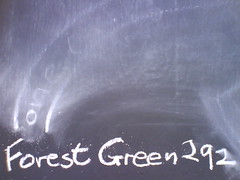
I really love the idea of Artists-in-Residence (even MSSL's got one, but she - orbits seldom intersect - came and went in a week when I wasn't there), and they really should be everywhere. In fact, the general concept of incorporating an outsider is a valuable one, as long as is it isn't embedding for a defined purpose. The photo's from Joanna Griffin (or rather her bits and pieces in Flickr), and it used to be the lab's phone number in the pre-fibre age.
.
This on the other hand, is snatched from the mouth of Karel Nel, who's got a deep-astronomy inspired exhibition in London now, until 9 October '08:
What was it like, visiting observatories?
I really love the idea of Artists-in-Residence (even MSSL's got one, but she - orbits seldom intersect - came and went in a week when I wasn't there), and they really should be everywhere. In fact, the general concept of incorporating an outsider is a valuable one, as long as is it isn't embedding for a defined purpose. The photo's from Joanna Griffin (or rather her bits and pieces in Flickr), and it used to be the lab's phone number in the pre-fibre age.
.
This on the other hand, is snatched from the mouth of Karel Nel, who's got a deep-astronomy inspired exhibition in London now, until 9 October '08:
What was it like, visiting observatories?
At the summit of Mauna Kea, Hawaii, some of the world's most powerful telescopes are trained on the powder-black darkness, looking at complexity and eternity. It is awesome and desolate. Even the scientists fall silent in the face of that.
Nature, 2 October 2008
Tuesday, June 03, 2008
Review of Pet Porte
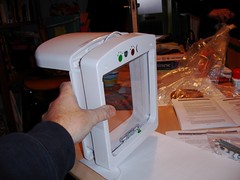
Pet Porte is a microchip-reading catflap. In other words, it detects and scans a cat's microchip (which your vet can easily insert), and will only let known cats in. Conversely, unknown cats (with unrecognised or no chips) won't get in. You could call it a biometric passport for cyborg cats.
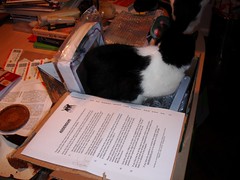
We were keen early adopters, since we have issues with neighbours' cats coming in and worrying the legitimate residents. Our two, Oscar and Felix, both 12. y.o., were often joined by The Black Cat from Two Doors Down. The happy group also included Zippy from Next Door as well, but she went through the cat flap in the clouds some time ago. TBCfTTD was a pain. He was young (2) and aggressive, and prone to spraying as well as being a chav.
We've tried magnet-sensing catflaps in the past, but they are a waste of time. Your furry friend has to haul a magnet collar around, which is detected by a coil in the sill of the catflap, which jinks open a solenoid and in he gets. All quite good, except that the magnets are quite large, and are lost. That is, removed by the cats, who just wanna be free. To have good time, to party.
So, when the opportunity to refit the doors came up, we decided to get the new door fitted with this miracle of RFID engineering. I'd heard about it after some speculative Googling, after a conversation about an undergraduate's technology/business dissertation. Handy sometimes, the day job.
A normal chip reader is hand-held if a bit clunky – I'm old enough to think Psion Organiser II when I see one – and in use it is waved across the neck of the animal to excite the chip and detect its response code (a moderately long integer). It's quite simple, and there's no encryption or anything. The manufacturers of the chips evidently collaborate to establish a system whereby all the codes are unique (otherwise what's the point?). The chips are used for positively identifying animals, which helps with lost doggy scenarios (chips are back-registered to the owner) and to discourage theft (though I've never seen an animal with a Don't Nick Me I'm Chipped sticker).
The flap-mounted chip reader is a bit clumsier than a hand-held reader. There needs to be a big detection coil with a nice spread-out field of action to catch the chip as it waves by at a random distance and speed, and this needs to be done before the cat, who can't read a manual, tries to get through the door. Consequently, there's a big bit sticking out of the outside of the catflap. Apart from that, the construction is much the same as other solenoid-locked catflaps, like the magnetic ones, slightly more chunky than a completely passive catflap.
We got ours direct from the manufacturers in Jersey. There's a lot that's clearly Version 1.o about the product. To me, it seems over-engineered in some places, and under-developed in others. It's also not that cheap. Do we really need to paw- and moon-shaped lights for example? A single LED could probably have sufficed. It may have been a requirement of the chip reader, but does it absolutely need a power supply? Other locking catflaps seem to make do with a 9 V battery.
Fitting is not different to any other catflap, with the added complication of ensuring that the Porch (the housing that contains the chip-reading antenna coil) is mounted and weatherproof.
With a cooperative cat, linking the reader to the chip is easy. If the cat doesn't have chip, there's a chip-free mode available.
Our cats were well used to catflaps, so this was barely any difference. There seems to be a slight delay before opening, but I think after a day or two most cats will adapt. I guess after a while they will listen for the click of the latch before really pushing.
Overall, a success.
We were keen early adopters, since we have issues with neighbours' cats coming in and worrying the legitimate residents. Our two, Oscar and Felix, both 12. y.o., were often joined by The Black Cat from Two Doors Down. The happy group also included Zippy from Next Door as well, but she went through the cat flap in the clouds some time ago. TBCfTTD was a pain. He was young (2) and aggressive, and prone to spraying as well as being a chav.
We've tried magnet-sensing catflaps in the past, but they are a waste of time. Your furry friend has to haul a magnet collar around, which is detected by a coil in the sill of the catflap, which jinks open a solenoid and in he gets. All quite good, except that the magnets are quite large, and are lost. That is, removed by the cats, who just wanna be free. To have good time, to party.
So, when the opportunity to refit the doors came up, we decided to get the new door fitted with this miracle of RFID engineering. I'd heard about it after some speculative Googling, after a conversation about an undergraduate's technology/business dissertation. Handy sometimes, the day job.
A normal chip reader is hand-held if a bit clunky – I'm old enough to think Psion Organiser II when I see one – and in use it is waved across the neck of the animal to excite the chip and detect its response code (a moderately long integer). It's quite simple, and there's no encryption or anything. The manufacturers of the chips evidently collaborate to establish a system whereby all the codes are unique (otherwise what's the point?). The chips are used for positively identifying animals, which helps with lost doggy scenarios (chips are back-registered to the owner) and to discourage theft (though I've never seen an animal with a Don't Nick Me I'm Chipped sticker).
The flap-mounted chip reader is a bit clumsier than a hand-held reader. There needs to be a big detection coil with a nice spread-out field of action to catch the chip as it waves by at a random distance and speed, and this needs to be done before the cat, who can't read a manual, tries to get through the door. Consequently, there's a big bit sticking out of the outside of the catflap. Apart from that, the construction is much the same as other solenoid-locked catflaps, like the magnetic ones, slightly more chunky than a completely passive catflap.
We got ours direct from the manufacturers in Jersey. There's a lot that's clearly Version 1.o about the product. To me, it seems over-engineered in some places, and under-developed in others. It's also not that cheap. Do we really need to paw- and moon-shaped lights for example? A single LED could probably have sufficed. It may have been a requirement of the chip reader, but does it absolutely need a power supply? Other locking catflaps seem to make do with a 9 V battery.
Fitting is not different to any other catflap, with the added complication of ensuring that the Porch (the housing that contains the chip-reading antenna coil) is mounted and weatherproof.
With a cooperative cat, linking the reader to the chip is easy. If the cat doesn't have chip, there's a chip-free mode available.
Our cats were well used to catflaps, so this was barely any difference. There seems to be a slight delay before opening, but I think after a day or two most cats will adapt. I guess after a while they will listen for the click of the latch before really pushing.
- Features: good.
- Price: fair.
- Installation: slightly fiddly. Requires a constant power supply, i.e. uses 10 Watts and 1 socket.
- Other: antenna housing sticks out, this is a bit fragile and sticks out such that it may get struck by human legs and feet.
- Compatibility with cats behaviour: good (sometimes Oscar wants us to open doors, but that's probably normal).
- Keeps the Wrong Cats out: certainly.
Overall, a success.
Thursday, February 07, 2008
Utilitarianism
Felix is not gaining great happiness, and indeed is accumulating unhappiness. Although he numbers only one, this equation bothers us highly. What would Jeremy say? He's dead of course, and so are we all eventually.
Sorry to get legalistic and philosophical, but we need air support at times like these. Hand to hand moral battles are tough.
As his carers on Earth, we have certain ultimate powers. We've made a decision, and it is due to be enacted today. Please remember Felix as he was, not as he is now, or whatever he will be hence.

Sorry to get legalistic and philosophical, but we need air support at times like these. Hand to hand moral battles are tough.
As his carers on Earth, we have certain ultimate powers. We've made a decision, and it is due to be enacted today. Please remember Felix as he was, not as he is now, or whatever he will be hence.
Sunday, December 09, 2007
Unlucky Felix
Poor thing, he's got sore gums and can't eat properly, and looks inelegant.
He's got squamous cell carcinoma, which means a sodding great lump in his mouth.
We have been giving him squashy things to eat (yum yum) and regular flannel-baths (yuck).
Here he is in happier times:




Update (6 Feb). He's been getting increasingly alarming of appearance (pulling his own fur out because his tongue's not working) and thin as well. As well as that, he's hungry ALL the time. We are in the midst of making the most difficult sort of decision ...
He's got squamous cell carcinoma, which means a sodding great lump in his mouth.
We have been giving him squashy things to eat (yum yum) and regular flannel-baths (yuck).
Here he is in happier times:
Update (6 Feb). He's been getting increasingly alarming of appearance (pulling his own fur out because his tongue's not working) and thin as well. As well as that, he's hungry ALL the time. We are in the midst of making the most difficult sort of decision ...
Tuesday, October 09, 2007
Beauty is in the eye of the stock holder
Got approached by StockphotoPro through my Flickr Mail, (Dear Matt, your photos are classics, add them to our archive and make us lots of money, you vain person) on the basis of these images:


Flattered, obviously, though not sure how much critical response was there. Suspect a bit of filtering has been done based on the number of Faves each image has already attracted. This wisdom of crowds method probably suits something as intentionally bland and average as stock photography.
Flattered, obviously, though not sure how much critical response was there. Suspect a bit of filtering has been done based on the number of Faves each image has already attracted. This wisdom of crowds method probably suits something as intentionally bland and average as stock photography.
Monday, July 09, 2007
Grid
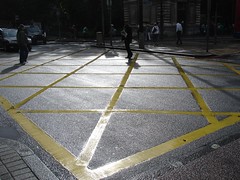
I saw something shining in my face, oddly. It was the Euston Road, which I was in the process of crossing, once again. Interrupted from my thought (how far away we are now from the beginning of the fresh day) I fumbled with the machine, and aimed and pressed the switch. Just before the light changed.
Later, it provokes some unusual quotations from, what, Philip K Dick?
Later, it provokes some unusual quotations from, what, Philip K Dick?
Monday, May 28, 2007
Mahabarata
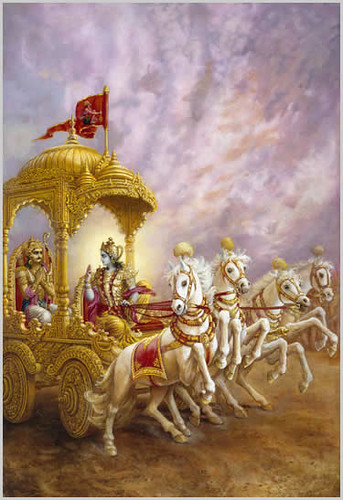
Rain stopped other play, so to Brighton to see a production of Mahabarata. Previously at Sadler's Wells.
Baffling story that I'll read up later, and great walky/dancy movements. Strong, shining music and colourful swishy design. But where was the puppet/video stuff? Tall pokey bum-numbing theatre. Cheap seats you see, or rather you don't see because they are half a mile from the stage.
Still, not complaining, and the old lady by the sea's always good for a laugh. Now, if only we can work out a smoother way of getting there. I'm thinking a pincer movement to Shoreham, and a little hop on the train.
Image courtesy of Swami Gaurangapada
Saturday, April 28, 2007
Beer going around
There in the crowded room, the guy I'd never met before pulls out photos that I had taken. Apparently top google for the term "Farnham Beerex", the official dead web-1.0 non-social site not cutting it at number 3. Last night I had a lot of the good natural stuff, a few too many burgers and no cigars. It's a remarkably peaceful night considering it's a vast room – the Maltings – crammed with drunk men (98% of them). Like the building, most of the punters are into middle age and aren't interested in showing off. So this friend of a friend is telling me all about this character Drift Words and this site called Flick or Flack.
More coincidence. Another friend twice removed turns out to be my over the road neighbour, whom I thought looked familiar. Ahh, the social properties of liquid bread!
More coincidence. Another friend twice removed turns out to be my over the road neighbour, whom I thought looked familiar. Ahh, the social properties of liquid bread!
Monday, January 08, 2007
Why Rye
Rye is a geography lesson that you can live in. We chose not to, though stayed at this cobbly little Sussex town for a couple of days after Christmas. The geography part of it is that the sea keeps moving, and they have to keep moving the harbour. The present one is still a good distance from the high water mark, and a substantial channel has had to be built to keep it going.


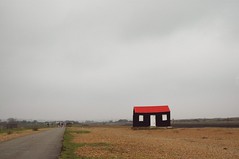
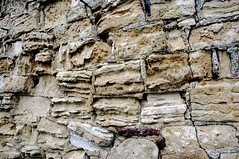
more pictures
We stayed at Jeake's House, on Mermaid Street, which like the town, has been converted nicely to its present use. It's a bit twee, but not too much. We also liked eating at the Landgate restaurant, the Apothecary coffee shop and a few other places.
Driving there and back was easy. Sat nav = no arguments!
more pictures
We stayed at Jeake's House, on Mermaid Street, which like the town, has been converted nicely to its present use. It's a bit twee, but not too much. We also liked eating at the Landgate restaurant, the Apothecary coffee shop and a few other places.
Driving there and back was easy. Sat nav = no arguments!
Monday, December 04, 2006
Why I like Germaine Greer
Plain English? Naah, it's the details, innit.
the full monty ...
As the discontinuity concept is fundamental to understanding what the best of today's artists are up to, it's worth explaining again. Art detaches itself from the unsynthesised manifold by a number of strategies. It may take refuge in a dedicated space called a museum or a gallery, where it may not be touched or moved. It may be surrounded by a barrier, put upon a plinth, enclosed in a frame or a moat of white paper - whatever. To understand this is to understand why installation is such an important consideration in the contemporary art project. It was Kant who explained that the art object exists only as the concept of itself, all its other sensory qualities being associated with pleasure or desire and therefore ulterior.
I can still remember the excitement of reading the Critique for the first time 50 years ago, and basking in the glow of Kant's beautiful mind. Chrissie and Ben can take their Golden Bull award and stuff it.
the full monty ...
Tuesday, August 08, 2006
Summer with Monika
Dir: Ingmar Bergman, 1952
Not a thriller by any means, but a deeply charming film. Scenes of the Stockholm archipelago are marvellous, with the elements and seasons standing in as the Chorus as this quotidian drama/soap opera gracefully unfurls. Oh and a nude bathing scene during the lovers' sojurn by the shore, which we can all aspire to.
6/7
Not a thriller by any means, but a deeply charming film. Scenes of the Stockholm archipelago are marvellous, with the elements and seasons standing in as the Chorus as this quotidian drama/soap opera gracefully unfurls. Oh and a nude bathing scene during the lovers' sojurn by the shore, which we can all aspire to.
6/7
Monday, July 31, 2006
Images, science, art
 I think I've written before about science images as art. Sometimes I think that curators of certain of these collections get too involved in the gee-that's-nice reflex, rather than reflecting on whether the image communicates something to do with the research as a result of its visual qualities, or despite them. I've been dissapointed by some such UCL competitions before. Not because of the lack of ingenuity of the image-makers, but because of a lack of overall definition of the goal of a successful research image that also is art. To my mind, there is a sweet spot where the two qualities support each other.
Apropos of nothing really (I saw it here), here's another striking collection, supported by the Wellcome Trust. This particular image is a nettle leaf. It looks dramatic, certainly, but that quality lets you understand how the thing works. Exactly the sort of art/science symbiosis I have in mind.
Perhaps because it's taking a narrower sample of work as a base (medical/biological microscopy), the criteria seem to be tighter, and the whole exhibition more satisfactory as a result.
Sunday, July 16, 2006
Sunset Picnic
A chance to see Simply Red, very nearly. Which is to see it was more about the Pimms and picnic than the performance itself.
Enjoyable enough, though we did feel like anthropologists. I thought to myself "these are really not my people somehow". If I ever did run into a field full of my people I might be terrified. I have a feeling that they tend not to gather in large crowds though.
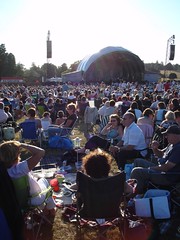
Enjoyable enough, though we did feel like anthropologists. I thought to myself "these are really not my people somehow". If I ever did run into a field full of my people I might be terrified. I have a feeling that they tend not to gather in large crowds though.
Friday, July 14, 2006
Beautiful
Yes I know the tour is hollowed out crap, but bikes are still beautiful, and they inspire strange beauty like this, concerning a publicity-shy but influential frame-builder:
Love that "everywhere an algorithm can invade". For the assertions themselves, you'll have to go to the source. Allez!
This may explain the profound obscurity surrounding the life of Alvin Drysdale the man, about whom almost nothing may be found among the vast reaches of the Internet in 2006 — while photos and descriptions of his bikes pop up everywhere an algorithm can invade. The few assertions we can be relatively sure of:
Love that "everywhere an algorithm can invade". For the assertions themselves, you'll have to go to the source. Allez!
Tuesday, July 11, 2006
Tuesday, May 23, 2006
Slight changes to blogrolls
Repulsive Monkey:
Ni Hao: Running in Suffolk, Virtual Mandarin, Chinese with Ease, Manchurian Candidate
Zai Jian: Peter Bojanic
drift:::words
+ : nothing
– : all running blogs
Ni Hao: Running in Suffolk, Virtual Mandarin, Chinese with Ease, Manchurian Candidate
Zai Jian: Peter Bojanic
drift:::words
+ : nothing
– : all running blogs
Subscribe to:
Posts (Atom)